Tracing their history back to ancient civilizations like the Egyptians and Romans, the earliest known safe was discovered in the tomb of Pharaoh Ramesses II from the 13th century B.C. With a locking system resembling the modern pin tumbler lock, these first safes were made from wood. As security features evolved, safes became more sophisticated and intricate in their construction.
Victorian Parlor Safe
Many Victorian “parlor safes” were sold with ornate painted exteriors that helped them blend into the interiors of upscale homes or businesses, while banks or financial institutions often purchased massive cylindrical or spherical “cannonball safes.” By the early 20th century, manufacturers like Globe-Wernicke and the Macy Company were building safes with modular divided interiors known as “cabinet safes.”
Victorian parlor safes are elegantly designed safes intended for two purposes: protecting valuables and serving as a decorative piece of furniture. You will find these safes in various styles, such as:
- Boudoir safes
- Jewelry safes
- Brothel safes
- Tabletop parlor safes
Double Door Safes
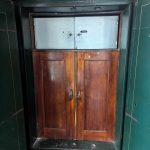
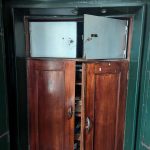
These larger safes feature two doors and were popular in banks, offices, and hotels during the latter half of the 19th century.
Toronto Safes Work
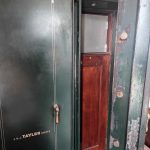
John Taylor and his brother James arrived from Scotland as young boys in 1838. In 1855, they established their safe manufacturing business J & J Taylor Safe Company. Although James Taylor returned to the British Isles shortly thereafter, reportedly because of ill health, the business thrived. Eventually it became known as the Taylor Safe Company, most likely coinciding with the return of James to Great Britain, and subsequently the Toronto Safe Company. The Taylor Safe Works was one of the most successful manufacturers of its kind in North America during the second half of the 19th century and the first half of the 20th. Their safes were distributed extensively throughout Canada and the U.S. John Taylor ran the company for most of this period. He died in 1913.
The J. & J. Taylor Safe Works was also known as the Toronto Safe Works. The company began in 1855 as a foundry that made machine and large castings, materials for the building trade to be used as decorative and structural elements in buildings, boats, and safes. Their safes were fire and theft proof, which gave them a near-monopoly in the safe-making business. The safes were bulky and heavy. The factory expanded in 1867 and again in 1877 to occupy most of the east end of the block. Another addition was made in 1883. The company had its own wharf just west of the foot of Frederick Street and the slip ran up to the Esplanade. This was an advantage to the company for shipping in both directions as the distance between the wharf and factory was only one block at most. When the first railways were built by the Grand Trunk, the tracks ran along the south side of the Esplanade, and gave Taylor’s an optional and convenient alternative to shipping by water. In 1900, the company was reorganized. In the 1920s, the railways required more space and the city granted their demands. Building of the huge railway viaduct began in 1925 and went on for three years. Some of the land required was the south side of the Taylor property, forcing the company to close down in 1924. They never relocated. Some of their safes were still in use in the 1950s and 1960s.
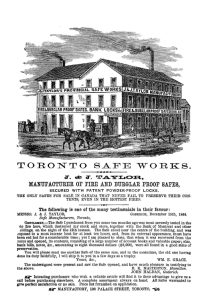
Relative Importance: Of all makers of safes in the city, J. & J. Taylor was the most successful and is important as a company because their products were not only fully secure but also lasted for years without giving problems. Their products represent quality in materials and workmanship that is rapidly becoming extinct.
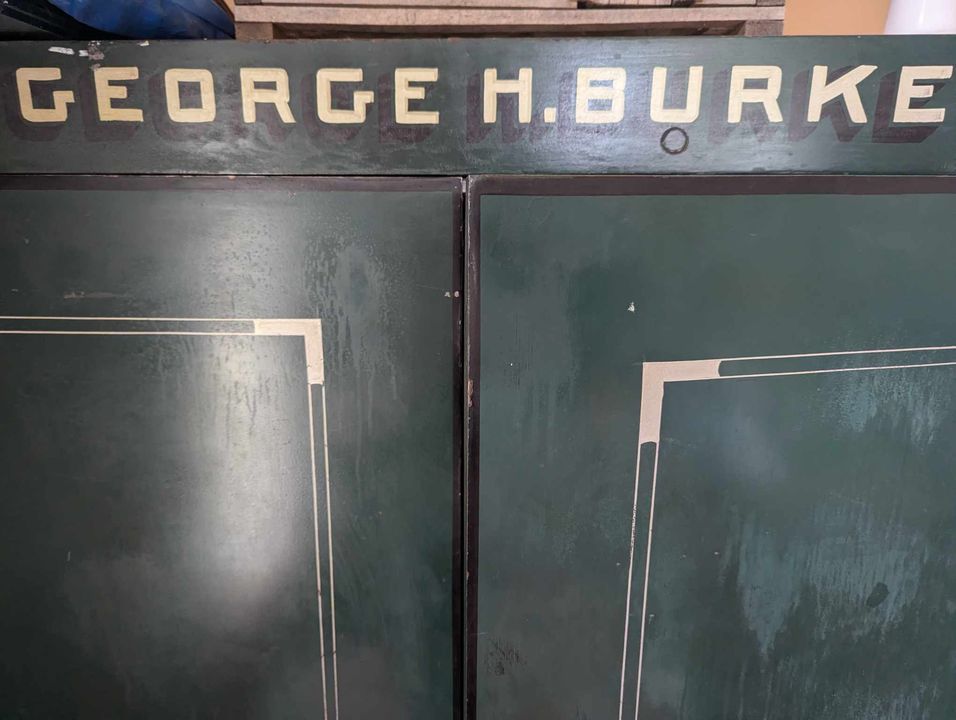
George H. Burke
- Port Arthur jeweller ; 53rd anniversary in jewelry business
- proprietor George Burke Jewellers ; Cumberland Street
- Training as watchmaker in Fergus, Ontario
- came to Lakehead early 1900’s ; worked for Alex Ross ; went into business with J.H. McCartney ;
- established own store in 1933



Leave A Comment