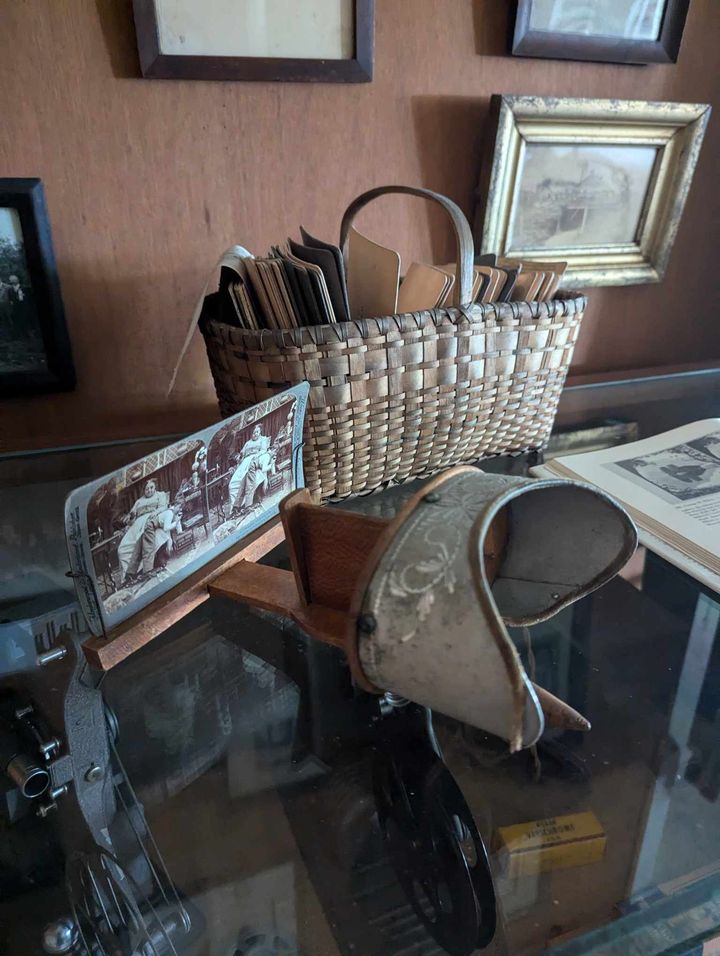
Stereographs, an early form of three-dimensional photograph, were a major vehicle for popular education and entertainment in the latter part of the nineteenth century. Stereographs are made with two almost identical photographs, side by side, to be viewed with a stereoscope. When viewed through a stereoscope, the photograph appeared three-dimensional, an awe-inspiring illusion for anyone during that time. Stereography, from the outset, was a commercial success.


In the 1850s, stereographs became the first mass-produced images sold. They were most popular between 1870 and 1920.First described by English physicist Sir Charles Wheatstone, stereoscopy was improved by Sir David Brewster in 1849, and was popular in the United States and Europe from about the mid-1850s through the early part of the 20th century.
The earliest stereograph was invented before the advent of photography by Sir Charles Wheatstone, using illustrations. In the following years, the technology was improved upon and came to include photographs. After being exhibited at the 1851 Crystal Palace Exhibition in London, the stereograph grew in popularity and spread internationally.
By 1860 both amateur photographers and publishing firms were making stereographs. The major stereo publishers sold their views by mail order, door-to-door salesmen, and in stores. Stereographs were sold individually and in boxed sets.
Stereographs were collected by many middle-class families in the late 19th century. People acquired stereographs of tourist sites they had visited, as well as exotic locales that they would only experience through the wonder of the stereoscope. Viewing stereographs was a common activity, much like watching television or going to the movies today. Stereoviews were also used as an education tool in classrooms.
Most commonly, stereographs were viewed on a hand-held stereoscopes, a device developed by Oliver Wendell Holmes in 1861; viewed on such a device, stereographs gave the image a sense of three dimensionality. Stereographs were meant to be viewed in 3-D with a stereoscope. Looking at the image up close and in 3-D allowed the viewer to enter the scene and examine the details of the photograph. Stereographs consist of two nearly identical photographs or photomechanical prints, paired to produce the illusion of a single three-dimensional image, usually when viewed through a stereoscope. Typically, the images are on card mounts, but they may take the form of daguerreotypes, glass negatives, or other processes.
Eventually, the stereograph was killed off—by even newer, more bewitching media. Though the craze endured for over 60 years, by the 1910s, postcards had become the hot new photo item to share and collect. Then around the same time, radio arrived, and it permanently unseated the stereograph as social parlor-room entertainment. Stereo images never entirely vanished; 3-D has enjoyed a few short vogues in movies, and as the “View-Master” children’s toy in the ’60s.


Leave A Comment